Standing in front of a miniature listing for the first time, most new collectors hit the same wall. The sculpt looks incredible in the photos, the lore pulls you in, and then you spot a number next to the word “scale” and have no idea what it actually means for the model arriving at your door. Scale is one of those hobby fundamentals nobody explains clearly enough before you buy, and getting it wrong is an easy way to end up with a miniature that does not fit your table, your army, or your display shelf.
This guide breaks down the two scales that matter most for anyone starting out: 32mm and 75mm. By the end, you will know what each number actually refers to, how the scales differ in use and in painting, and which one fits your goals as a collector.
What Does Miniature Scale Actually Mean?
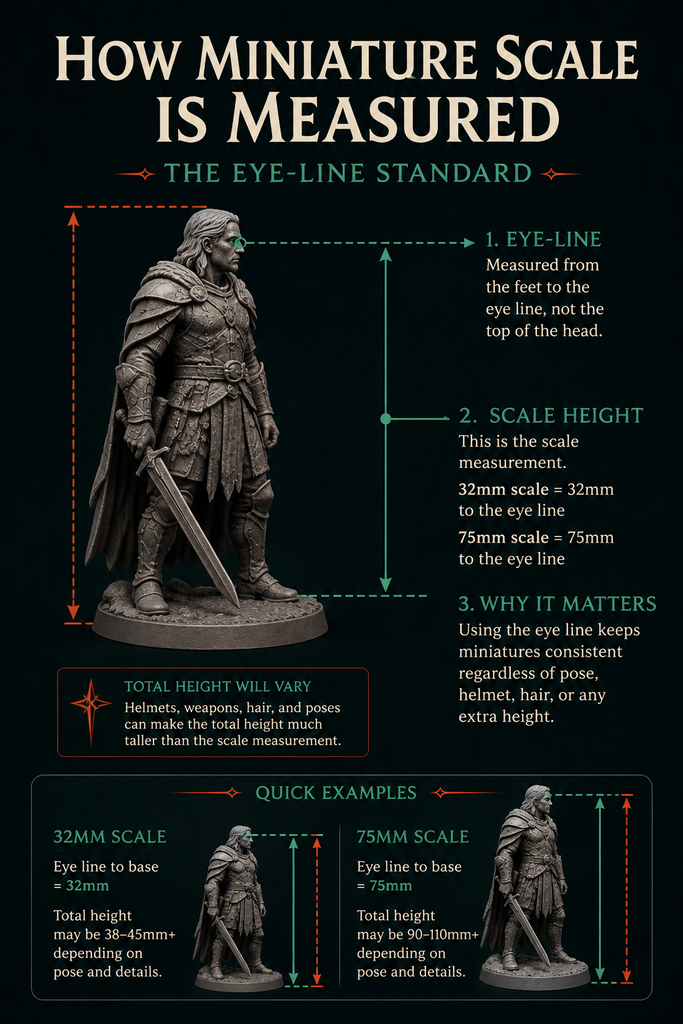
Scale is usually stated as the approximate height of an average standing human figure from the feet to the eye line, not to the top of the head. This convention exists so that helmets, horns, hats, and tall hair do not distort the number a buyer relies on. Not every seller follows this convention consistently, so it is worth checking a listing’s stated reference point rather than assuming every “32mm” or “75mm” figure was measured the same way.
Is a 32mm Miniature Actually 32mm Tall?
Not in total height, no. A 32mm figure is 32mm to eye height, which means a helmet, a weapon raised overhead, or a dramatic pose can push the total model well past that number. Two miniatures both marked 32mm scale can still look noticeably different in size once pose, base size, and sculpting style are factored in.
Total height would seem like the more intuitive measurement, but it falls apart the moment two miniatures are compared in different poses. A crouching rogue and a rearing dragon rider are both valid 32mm sculpts, yet their total heights would be wildly different if that were the reference point. Eye height keeps the comparison consistent regardless of pose.
32mm vs 75mm: The Core Difference
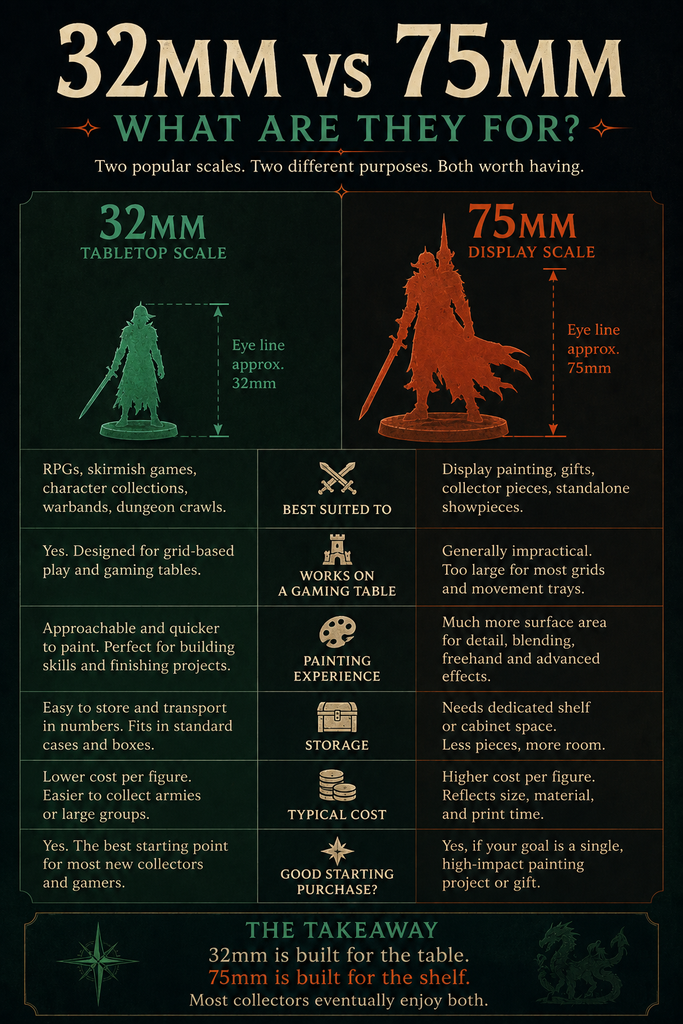
The simplest way to think about it is that 32mm is the playable everyday scale, and 75mm is the project-piece scale. Neither is objectively better. They serve different purposes, and most serious collectors eventually own miniatures at both.
| 32mm | 75mm | |
|---|---|---|
| Best suited to | RPGs, skirmish games, character collections | Display painting, gifts, standalone showpieces |
| Works on a gaming table | Yes, built for it | Generally impractical for grid-based play |
| Painting experience | Approachable, faster to finish | Far more surface area for detail and blending |
| Storage | Easy to store and transport in numbers | Needs dedicated shelf or cabinet space |
| Typical cost | Lower per figure | Higher, reflecting size, material, and print time |
| Good starting purchase | Yes, especially for a gaming collection | Yes, if the goal is a single painting project |
32mm: Made for the Table
32mm is the scale most people mean when they say “miniature” in a tabletop RPG or wargaming context. It is the scale used by the major tabletop game systems, and it is what most terrain, movement trays, and gaming tables are designed around.
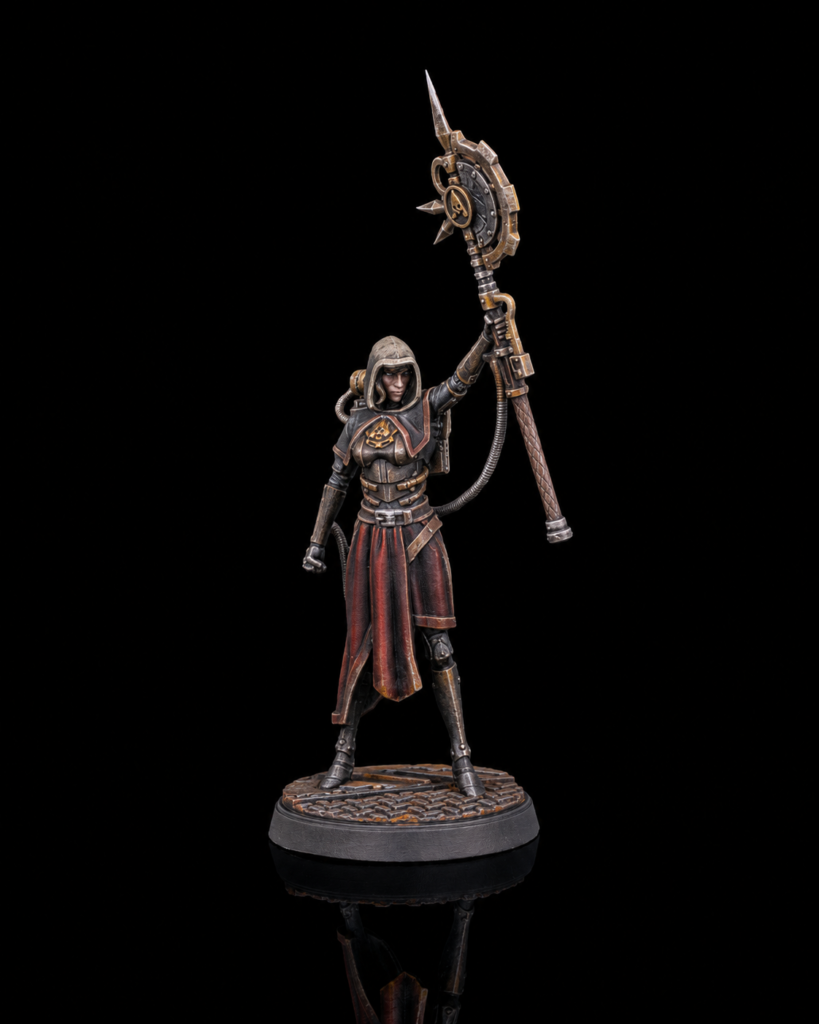
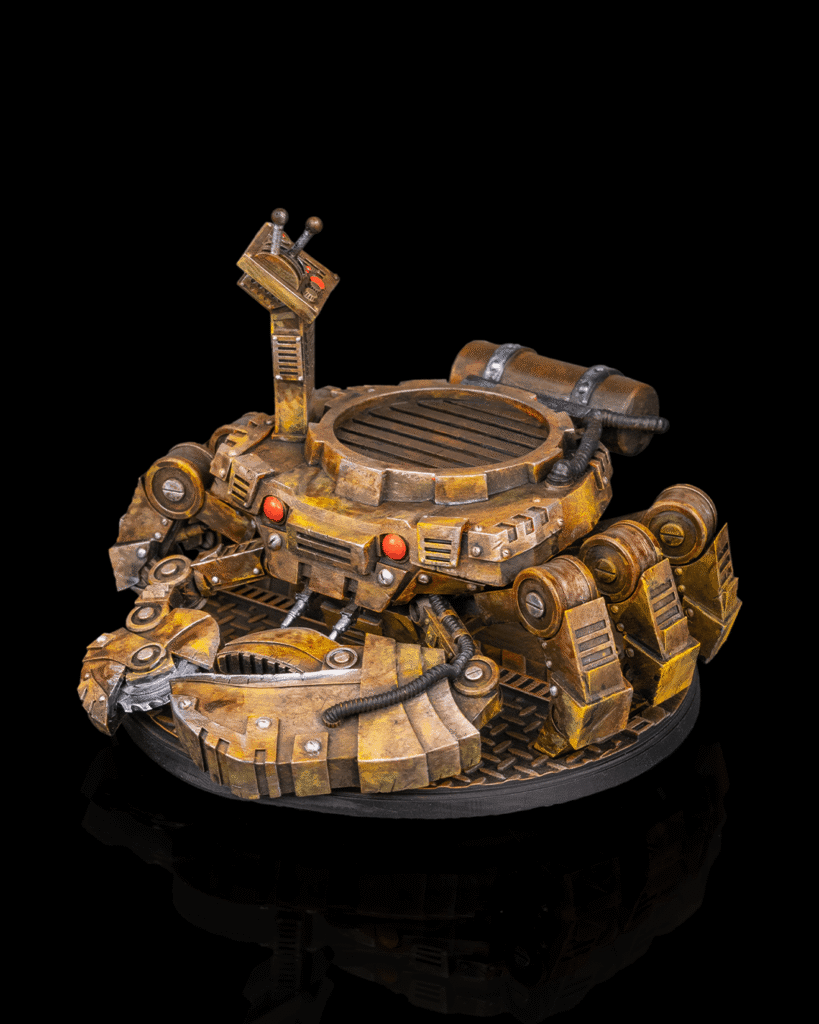
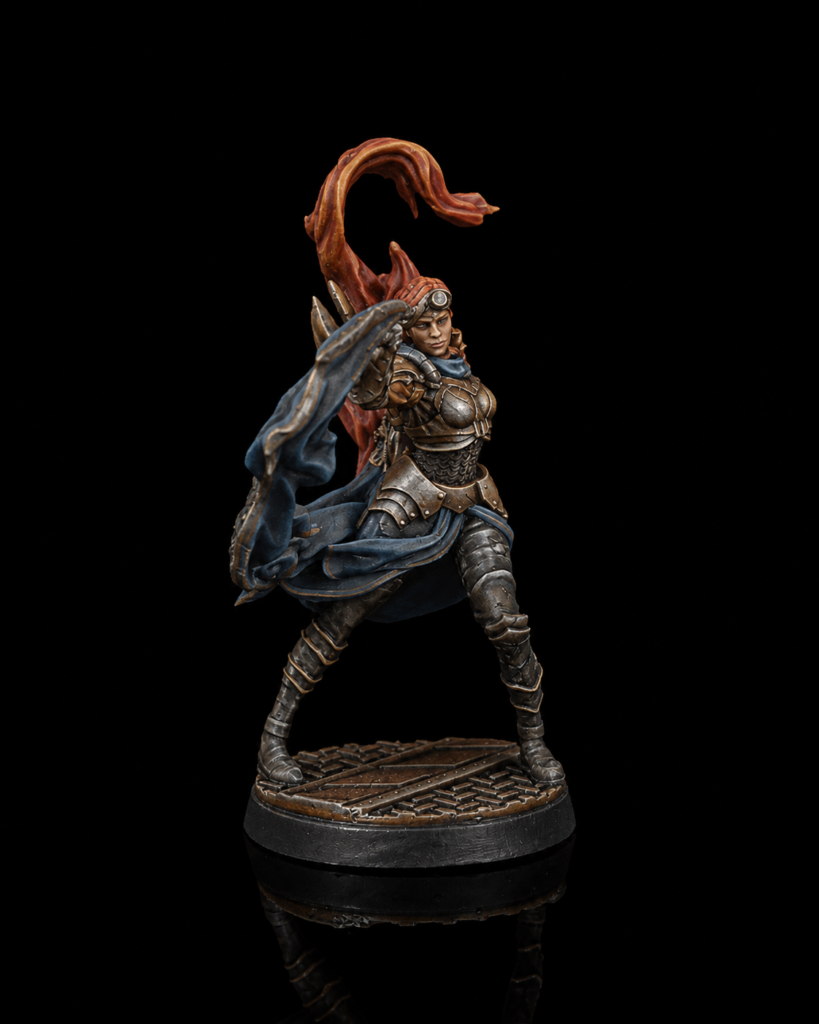
If you are building a D&D party, stocking an army, or filling out a dungeon crawl, 32mm is almost certainly the answer. It is compact enough to store in real numbers, cheap enough to collect at volume, and universally compatible with the terrain and basing standards the rest of the hobby uses. Our own Ironworks of Aurumdell collection is built at this scale specifically so every piece plays nicely on a standard tabletop.
What to Expect When Painting 32mm
32mm rewards patience over precision equipment. You do not need expensive optics to get a good result, though many painters do use a basic magnifying lamp for facial details and eyes. Detail is present but forgiving, which makes 32mm the friendlier starting point if you have never picked up a brush before.
Base size matters more at this scale than people expect. A 25mm or 32mm round base is standard for most humanoid figures, and matching your base size to the game system you play, whether that is 5E, Pathfinder, or a specific wargame, avoids awkward mismatches once your collection grows.
75mm: Made for the Shelf
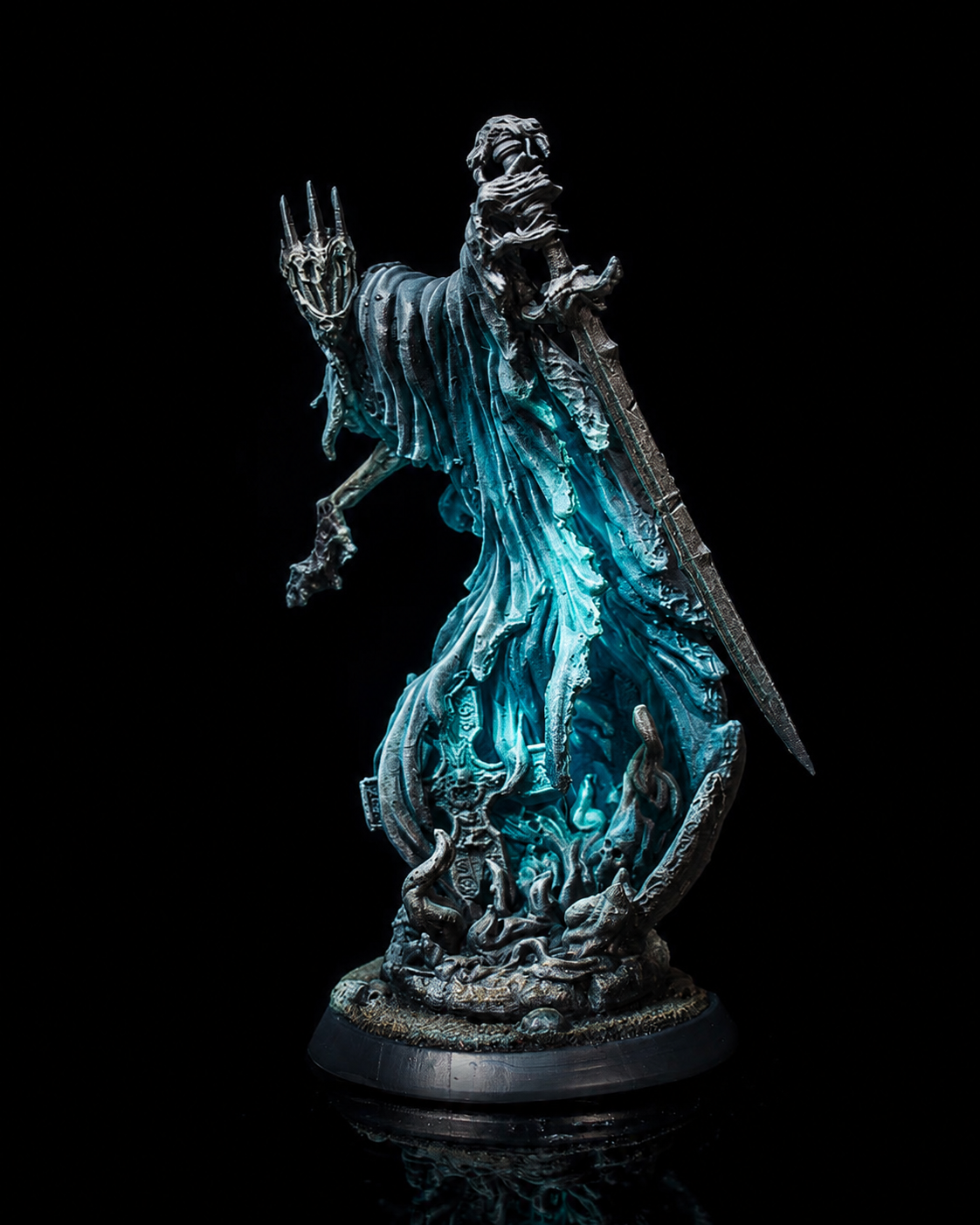
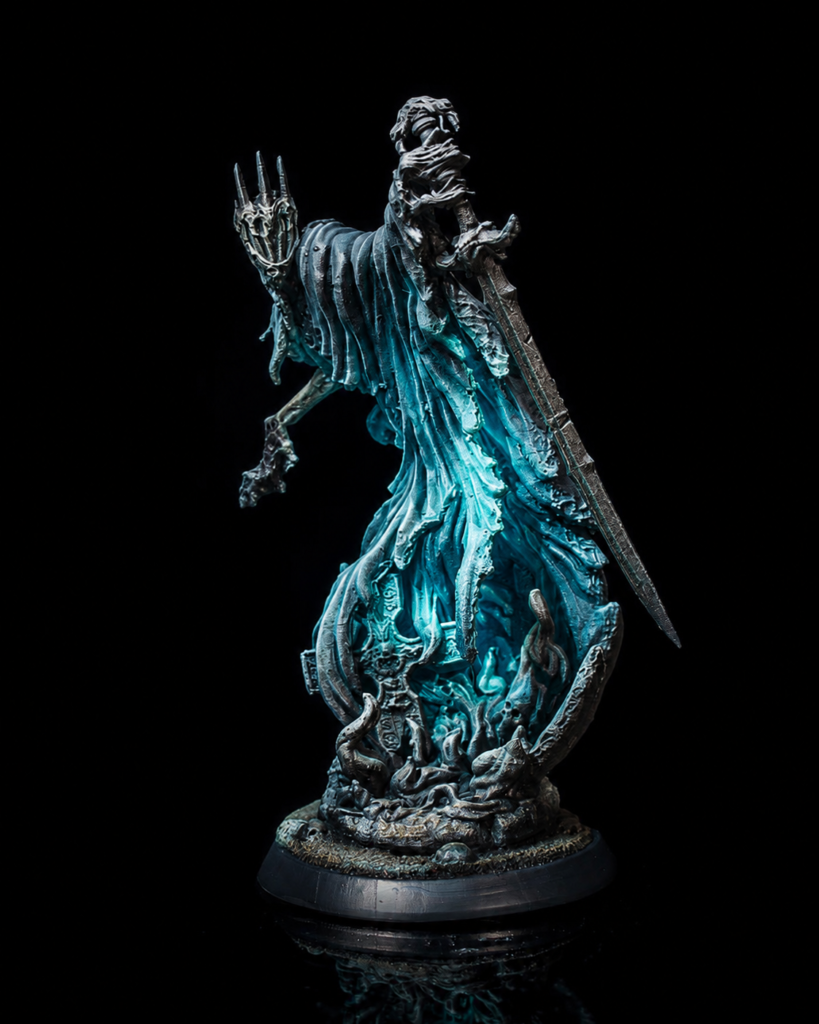
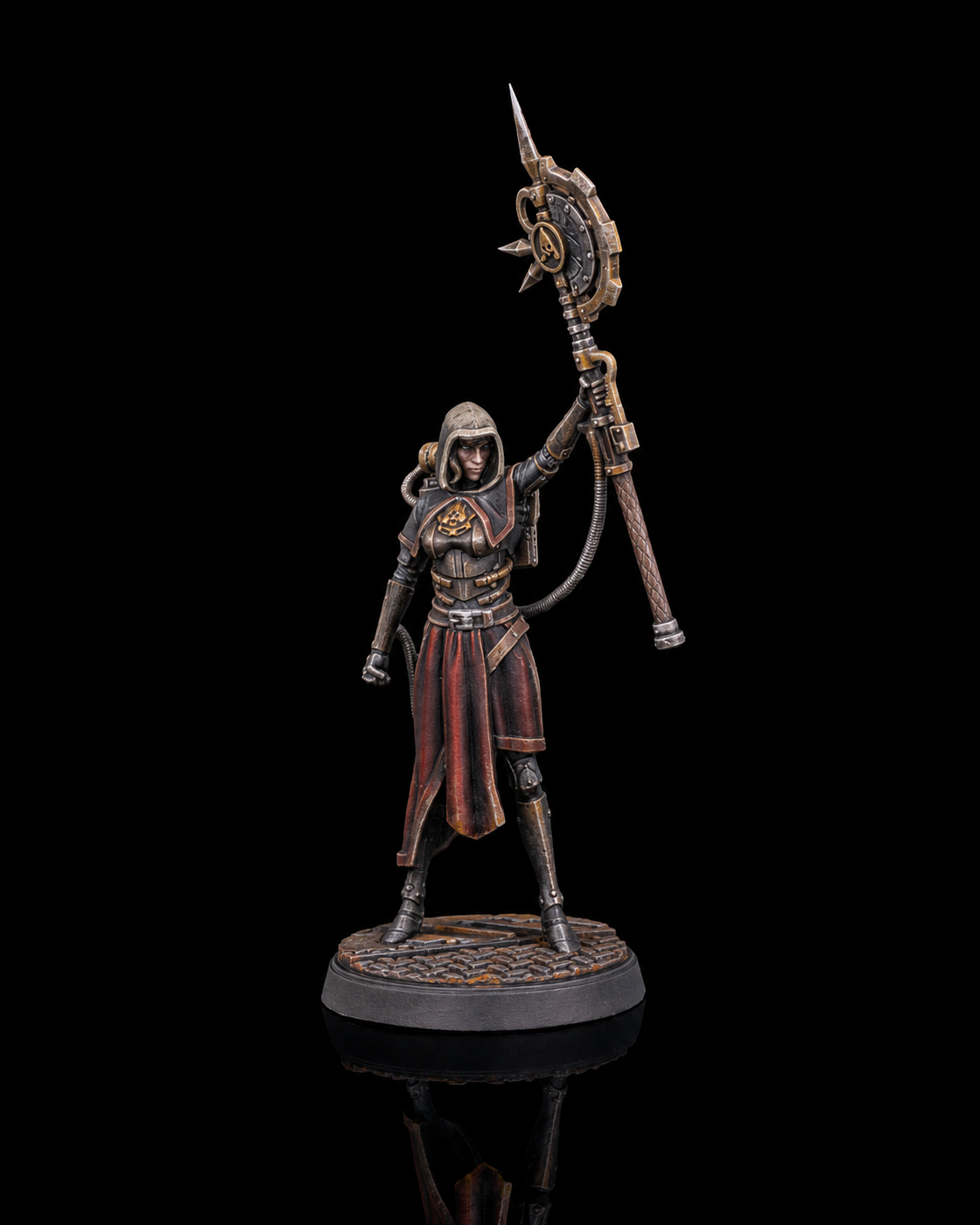
75mm sits in a completely different category of the hobby. At this size, a miniature stops being a gaming piece and becomes a display piece in its own right, closer in spirit to a small sculpture than a tabletop token. The jump from 32mm is not incremental, since the extra size gives dramatically more room for fine detail, freehand work, and layered shading.
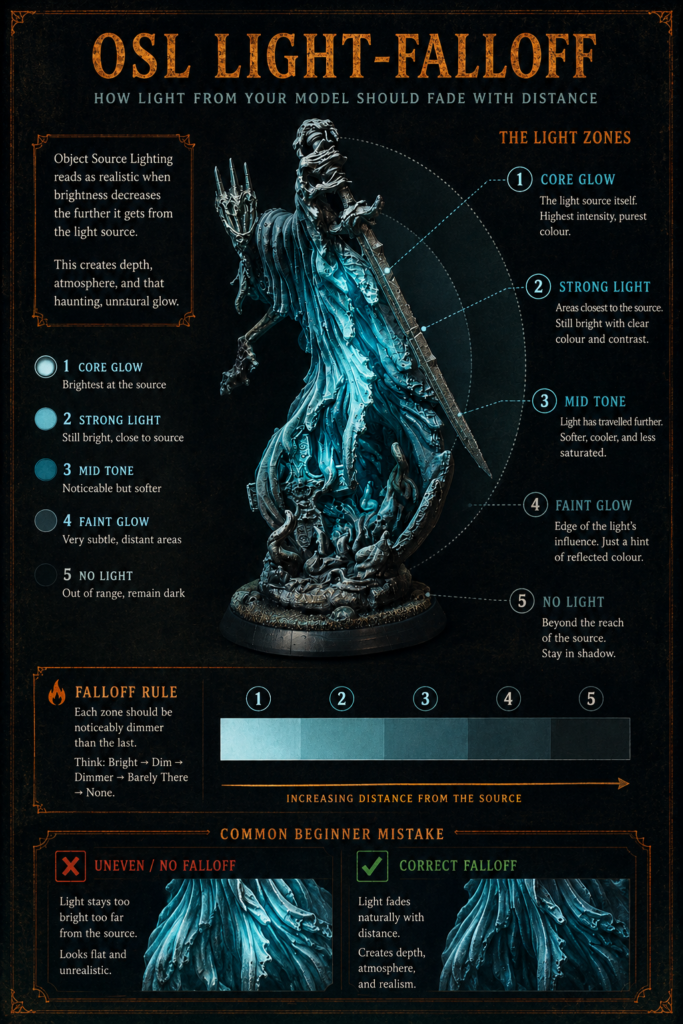
This is the scale collectors reach for when the goal is a single showpiece rather than an army. Face detail, fabric texture, weathering effects, and object source lighting all read far more clearly at 75mm, which is exactly why painters who want to push their technique tend to gravitate here. It is also why 75mm pieces are treated as hero products rather than everyday stock, taking longer to paint, longer to photograph well, and longer to do justice to.
Why 75mm Suits a Different Kind of Buyer
If your shelf is more gallery than game table, 75mm is worth considering even as a beginner. You will trade quantity for depth. A single 75mm figure will take considerably longer to paint than a 32mm miniature, but the finished result stands on its own as a centrepiece rather than one soldier among fifty.
It is worth being honest about the trade-off before buying. A 75mm miniature is not a bigger version of a quick weeknight project. It is a slower, more deliberate undertaking, and treating it that way from the start leads to a far better result than rushing it like a regular tabletop piece.
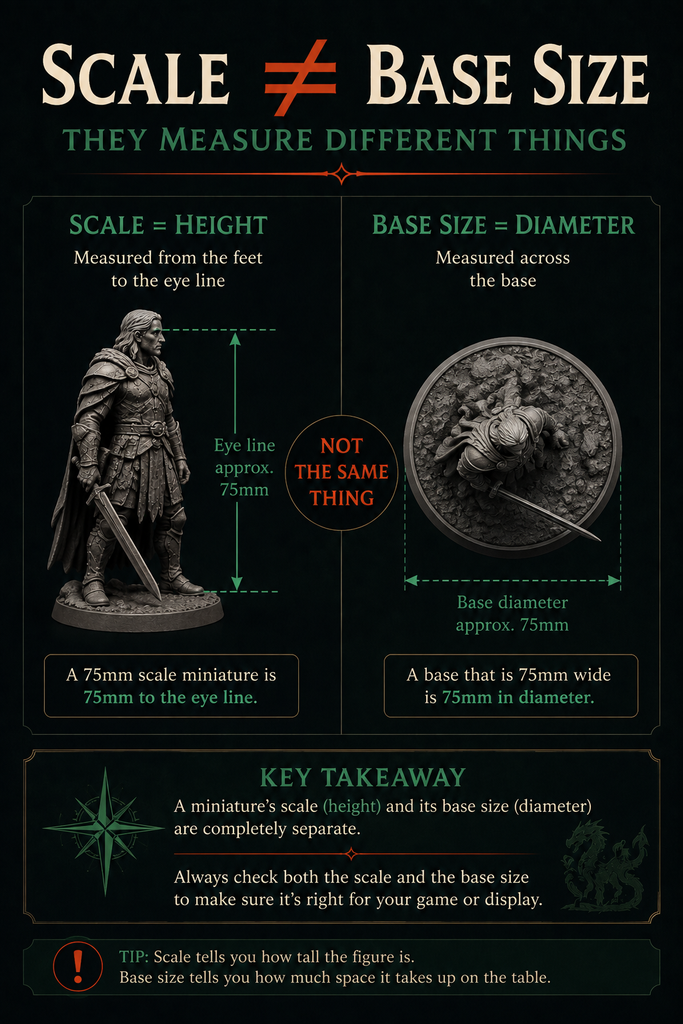
One distinction worth clearing up here: a 75mm-scale miniature and a 75mm base are not the same thing. Scale describes the figure’s intended size, while a base diameter describes the footprint a model stands on, often used for a large creature’s tabletop presence regardless of the figure’s own scale. Checking both figures separately avoids a confusing surprise on arrival.
Why Don’t All 32mm Miniatures Look the Same Size?
This catches a lot of new collectors off guard, especially when they are trying to match an existing party or army. A few things cause the variation even within a single stated scale.
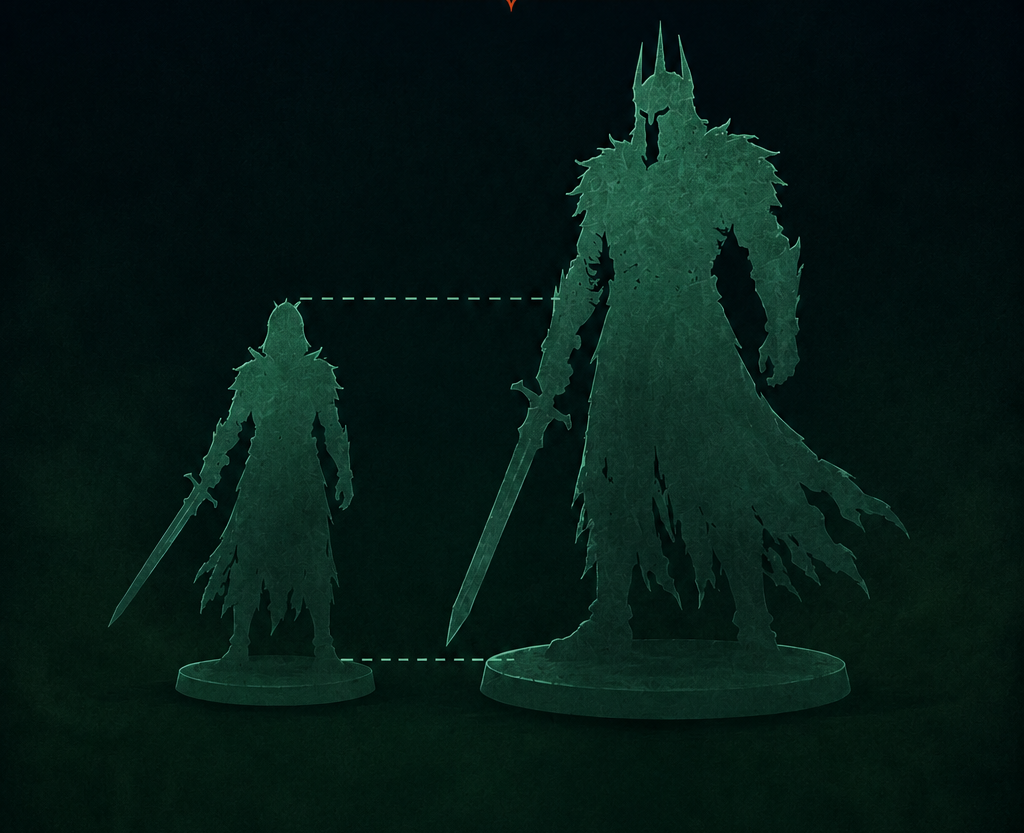
Proportions vary by sculpting style. Heroic scale deliberately enlarges features such as heads, hands, weapons, and armour so they stay visible and durable at tabletop distance, while true-scale figures use slimmer, more realistic anatomy. A true-scale 32mm figure can look smaller or less bulky standing next to a heroic-style 32mm miniature, even though both are correctly labelled.
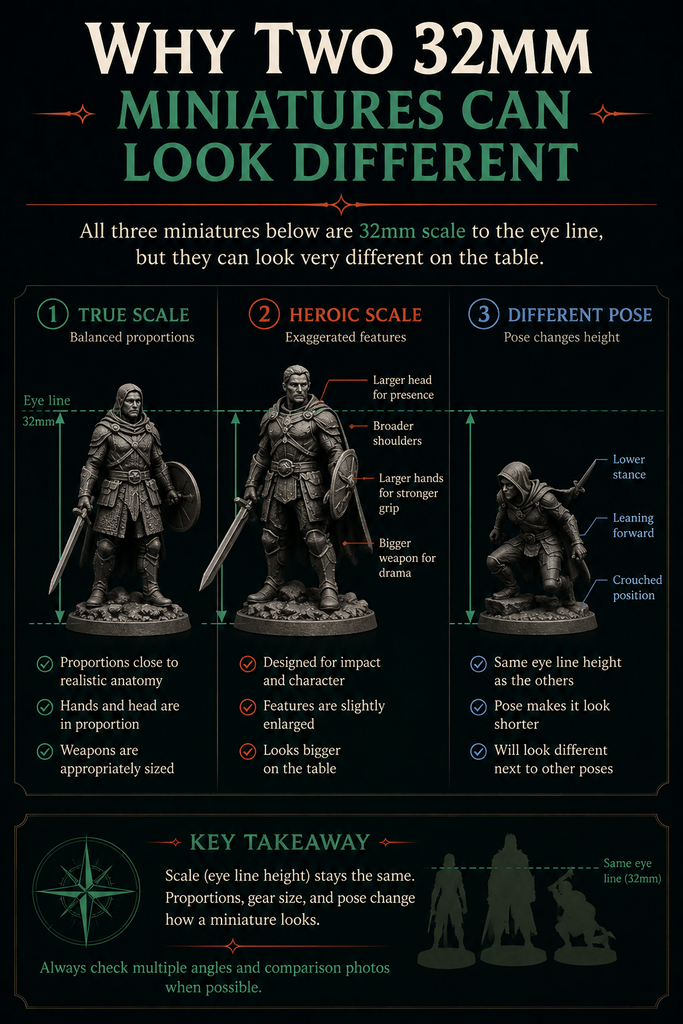
Pose changes the visual height too. A dramatic running, crouching, flying, or leaning pose will not measure the same way a neutral standing figure does, and a larger scenic base can make a model feel taller and more imposing without changing its stated scale at all. If you are matching an existing collection, comparing product photos against a ruler or a miniature you already own is the safest way to check before buying.
Can You Use a 75mm Miniature for Tabletop Gaming?
Technically yes, but it rarely works well on a standard grid or hex table. A 75mm figure will tower over everything else in a way that breaks immersion rather than adding to it, and it will not fit cleanly into movement trays or terrain scaled for 32mm play.
Where 75mm does work at the table is as an occasional set piece rather than a regular participant. A single 75mm miniature used sparingly, for a climactic boss reveal or a framed centrepiece on the game master’s side of the table, can add real impact precisely because it stands apart from everything else in play.
Should I Buy 32mm or 75mm?
If you want a miniature for tabletop RPGs, skirmish games, campaign play, or a compact growing collection, 32mm is the versatile choice. It is detailed enough to paint enjoyably, small enough to store and use easily, and visually at home with other modern gaming miniatures.
If you want a display piece rather than a gaming token, 75mm is the one to reach for. It suits a special character, a gift, a shelf centrepiece, or a longer painting project where the appeal is exploring skin tones, armour effects, and freehand detail up close.
If you are genuinely unsure, start with 32mm. It is the lower-commitment, more versatile first purchase, and moving up to a 75mm hero piece once you have a better sense of your own painting style is an easy step from there. That said, if display work is clearly what draws you in rather than gaming, there is no rule that says you have to start small. Some painters actually find the extra surface area on a 75mm sculpt makes certain techniques easier to see and control, not harder.
Getting the Scale Right for Your Setup
Before buying, think about where the finished miniature is actually going to live. A 32mm figure disappears a little on an empty shelf but shines on a crowded tabletop surrounded by terrain and other models. A 75mm figure needs breathing room, ideally its own spot on a shelf or cabinet where it will not be dwarfed by clutter or competing for attention with a dozen smaller pieces.
It is also worth checking what scale the rest of your existing collection uses, if you have one. Mixing 32mm and 75mm figures on the same game table looks jarring for the reasons already covered above, so keep gaming pieces consistent and reserve 75mm for standalone display purposes. For a deeper technical breakdown of scale conventions across the wider hobby, 3D Central’s guide to miniature scales is a solid reference if you want to go further than the basics covered here.
Scale is one of the first decisions every miniature collector has to make, and it shapes everything that follows, from how you paint to how you store and display the finished result. Whether you start with a full 32mm party or a single ambitious 75mm centrepiece, understanding what those numbers actually mean puts you in a far better position to buy with confidence.
Where myths take form.